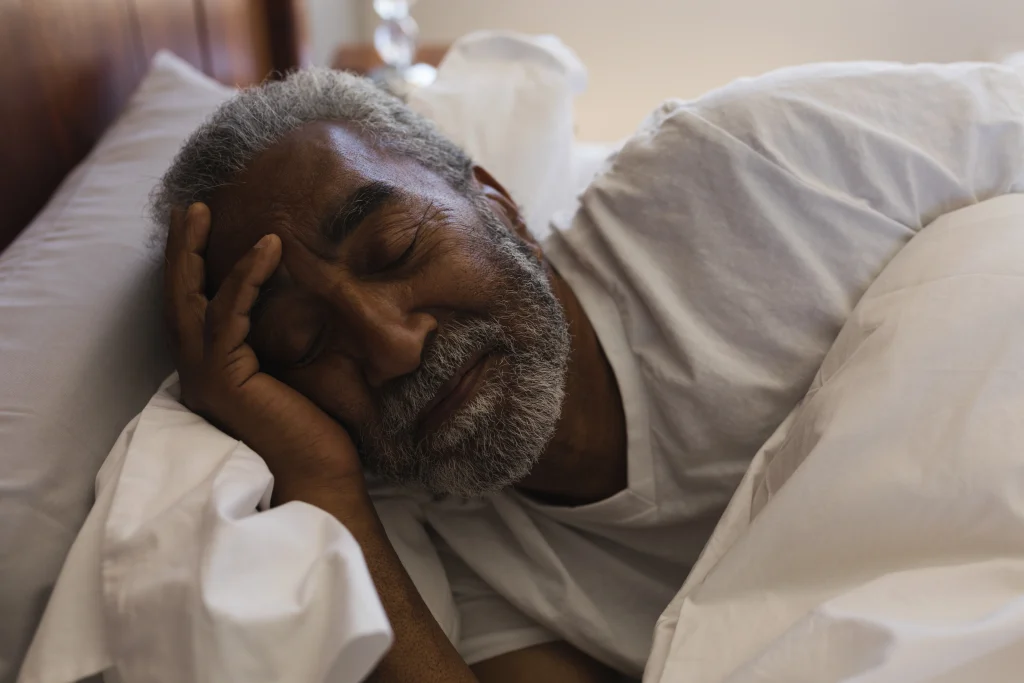
Poor sleep is one of the most common complaints among people over 50. You fall asleep fine but wake at 3am. Or you can’t drop off in the first place. Or you sleep for eight hours and still feel exhausted. You’re not imagining it — sleep genuinely changes as we age, and the reasons are largely biological.
Here’s what’s actually going on, and — more usefully — what the evidence says can help.
Why Sleep Changes After 50
Several things shift as we get older:
- Circadian rhythm changes — your internal body clock shifts forward, making you feel sleepy earlier and wake earlier
- Less deep sleep — we spend less time in slow-wave (deep) sleep, which is the most restorative stage
- More fragmented sleep — older adults wake more frequently during the night
- Hormonal changes — falling oestrogen and progesterone levels in women affect sleep quality significantly; testosterone decline in men has a similar effect
- Melatonin reduction — the body produces less melatonin (the sleep hormone) with age
None of this is inevitable in the sense of being untreatable. But it does mean that sleep in your 50s and 60s requires more active management than it did when you were younger.
7 Things That Actually Help
1. Keep Your Sleep and Wake Times Consistent
This is the single most evidence-backed sleep intervention there is. Going to bed and waking at the same time every day — including weekends — anchors your circadian rhythm. It feels restrictive, but within two to three weeks most people notice a significant improvement.
2. Cool Your Bedroom Down
Core body temperature needs to drop to initiate sleep. Older adults are less efficient at regulating this. A bedroom temperature of 16–18°C is considered optimal. If you’re going through menopause and experiencing night sweats, a fan, cooling pillow, or moisture-wicking bedding can make a material difference.
3. Limit Alcohol
Alcohol helps you fall asleep but fragments the second half of your night — reducing REM sleep and causing early morning waking. If you’re waking regularly between 3am and 5am, alcohol is often a contributing factor even if consumption feels moderate.
4. Get Morning Light
Exposure to natural light in the first hour after waking is one of the most powerful ways to set your circadian rhythm. Ten to fifteen minutes outside — even on a cloudy UK morning — is enough. This is particularly important in winter.
5. Magnesium Glycinate
Of all the supplements with a plausible sleep benefit, magnesium glycinate has the best evidence base. It supports GABA activity in the brain (the calming neurotransmitter) and muscle relaxation. 200–400mg taken an hour before bed is the typical dose. See our full guide to magnesium supplements.
6. Cognitive Behavioural Therapy for Insomnia (CBT-I)
This is the gold-standard treatment for chronic insomnia — more effective long-term than sleeping tablets. It involves sleep restriction, stimulus control, and addressing the thought patterns that perpetuate sleeplessness. The NHS offers it via Sleepio (free with some CCGs) or it can be accessed privately. If sleep is significantly affecting your quality of life, this is worth pursuing.
7. Review Your Medications
Many common medications affect sleep — beta blockers, some antidepressants, corticosteroids, and decongestants among them. If your sleep problems coincided with starting a new medication, it’s worth raising this with your GP. A dose timing change is sometimes enough to help.
What About Sleeping Tablets?
Prescription sleeping tablets (benzodiazepines and Z-drugs) are not recommended for long-term use in older adults — they’re associated with falls, cognitive impairment, and dependence. If your GP offers them, it’s worth asking whether CBT-I might be a better first-line option.
Over-the-counter antihistamine-based sleep aids (Nytol, Sominex) are similarly not recommended for regular use, particularly for people over 65.
The Bottom Line
Sleep changes with age, but it doesn’t have to be bad sleep. Consistent timing, a cool dark room, morning light, and limiting alcohol will help most people significantly. If sleep is a serious problem, CBT-I is the intervention with the strongest long-term evidence — and it’s available free on the NHS.